
As the global beauty community gathers at Cosmoprof this week, the air is thick with innovation. For skincare brands, the conversation has shifted: it is no longer a question of if you should add technology to your portfolio, but how to do so in a way that elevates your existing brand equity.
From the perspective of a strategic partner, we see this as more than just a hardware acquisition. It is a multi-dimensional puzzle involving Founders, Product Managers, and Marketing teams.
To move forward effectively, here are three pivotal considerations for teams currently evaluating their tech-integrated roadmaps for 2026.
1. The PM’s Perspective: Engineering for “Adherence” Rather Than Just “Output”
When a Product Manager evaluates a new device, the technical specifications are undeniably important. However, the most successful tech integrations focus on the “User Experience Equation.”
High-performance energy is only effective if the user feels compelled to use the device regularly. If a mask or a wand feels cumbersome or creates friction in an existing skincare ritual, the biological results will never materialize.
Our Suggestion: Focus on the “Frictionless Ritual.” Evaluate how a device’s ergonomics, weight, and portability complement your topical products. A device that a customer enjoys using every night is the one that will ultimately prove the efficacy of your brand’s active ingredients.
2. The Marketing Lens: Visual Cohesion as a Narrative Tool
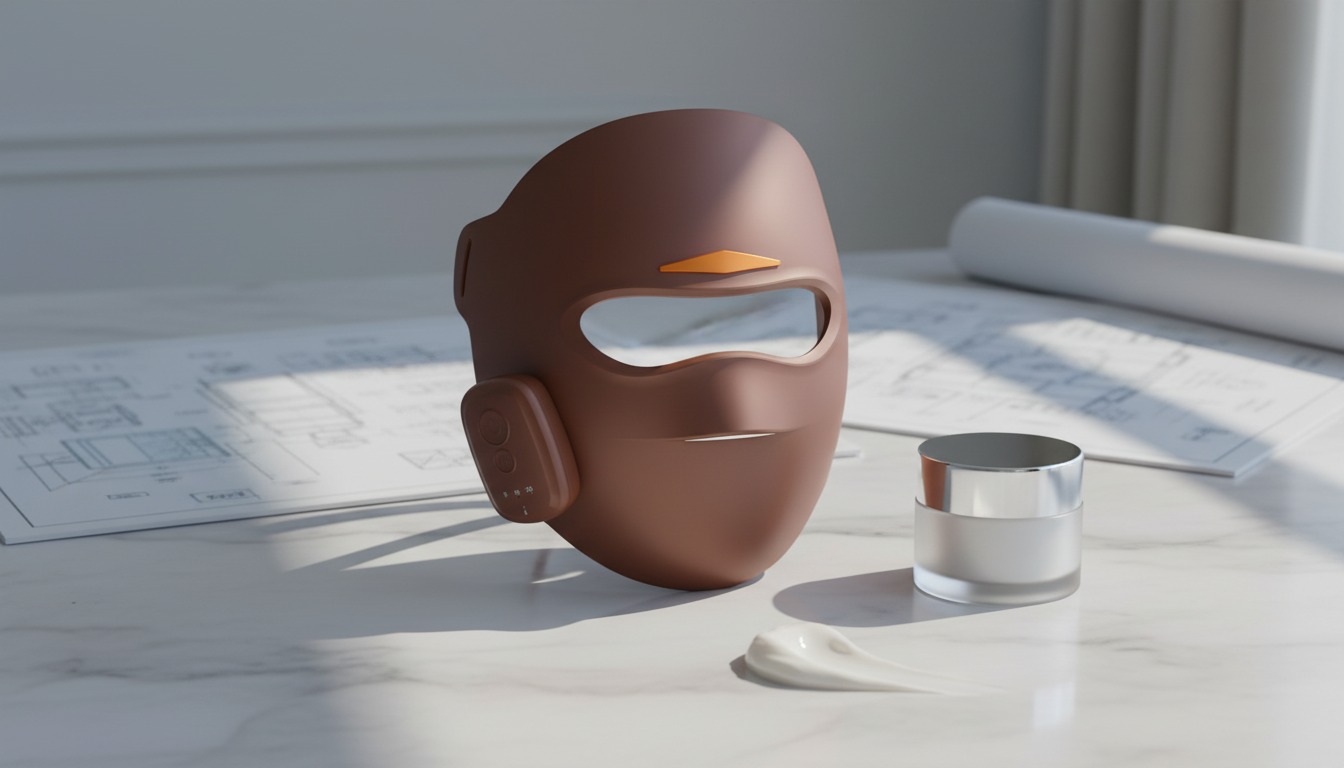
For a Marketing Director, the device is the most visible “brand ambassador” on a customer’s vanity. It must speak the same aesthetic language as your flagship serums and creams.
In a market saturated with generic hardware, visual identity becomes a powerful tool for differentiation. If your brand narrative is built on “Clean Luxury” or “Minimalist Science,” the hardware must mirror those values through its industrial design and finish.
Our Suggestion: Look for “Lifestyle Harmony.” The goal is to create a lifestyle icon that looks as good in a professional photoshoot as it does in a customer’s morning routine. Visual continuity between the bottle and the device builds a deeper layer of trust and perceived value.
3. Strategic Configuration: Balancing Performance with Commercial Accessibility
One of the most complex tasks for a brand’s leadership is finding the equilibrium between high-end features and a sustainable target price point.
Every strategic decision—from the number of LED wavelengths to the choice of housing materials—directly impacts the MSRP and the brand’s market positioning. It is rarely about having the most expensive configuration; it is about having the most intentional one.
Our Suggestion: Prioritize the “Hero Features” that align with your price-point strategy. By strategically configuring the hardware to meet specific commercial goals, you can offer your loyal audience a professional-grade experience that remains accessible. A partner who can navigate the nuances of “Performance vs. Price” is essential for long-term scalability.
Strategic Clarity in an Innovation Wave
While the industry buzz in Bologna focuses on what is “new,” the most resilient brands are focusing on what is “aligned.”
Tech integration is a journey that requires the synchronized efforts of product development, marketing, and visionary leadership. Whether you are in the early stages of a body contouring project or refining your next LED mask, the most successful path is one where technology acts as the accelerant for your brand’s core promise.
Navigating your product roadmap? We offer strategic consultations for brands looking to refine their tech configurations and brand alignment.