
As we head into the final months of 2026, the European Union’s Packaging and Packaging Waste Regulation (PPWR) is becoming a real priority for beauty brands.
For brand founders and product teams, new guidelines on non-recyclable materials and packaging volume might seem like just another operational hurdle. But treating compliance merely as a defensive task misses a much bigger opportunity.
When industry regulations push everyone to rethink packaging, the brands that win aren’t the ones who do the bare minimum. The winners are those who use this moment to retire outdated packaging habits and create an experience that feels cleaner, more responsible, and visibly higher-end.
Here is how smart beauty brands can turn packaging shifts into a genuine commercial advantage.
1. Compliance is the Baseline; Brand Equity is the Goal
The days of bulky, non-recyclable plastic packaging for home-use beauty devices are quickly fading. Retailers and global distributors are actively looking for cleaner alternatives.
However, your customer unboxing a premium device doesn’t read regulatory whitepapers—they care about the unboxing experience.
If a brand simply cuts corners with flimsy, generic brown boxes, the product can feel downgraded. The real art lies in replacing traditional packaging with solutions that look intentional, modern, and aligned with modern skincare aesthetics.
2. Upgrading the Interior: Moving Away from Traditional Foam
For years, the default packaging approach in beauty tech relied on generic plastic blister trays or dense foam. While functional in the past, traditional non-recyclable blisters often feel outdated—they look flimsy, tend to squeak or crack during transit, and clash directly with modern sustainable brand expectations
Today, brands can choose between two modern, compliant packaging routes depending on their budget and target positioning:
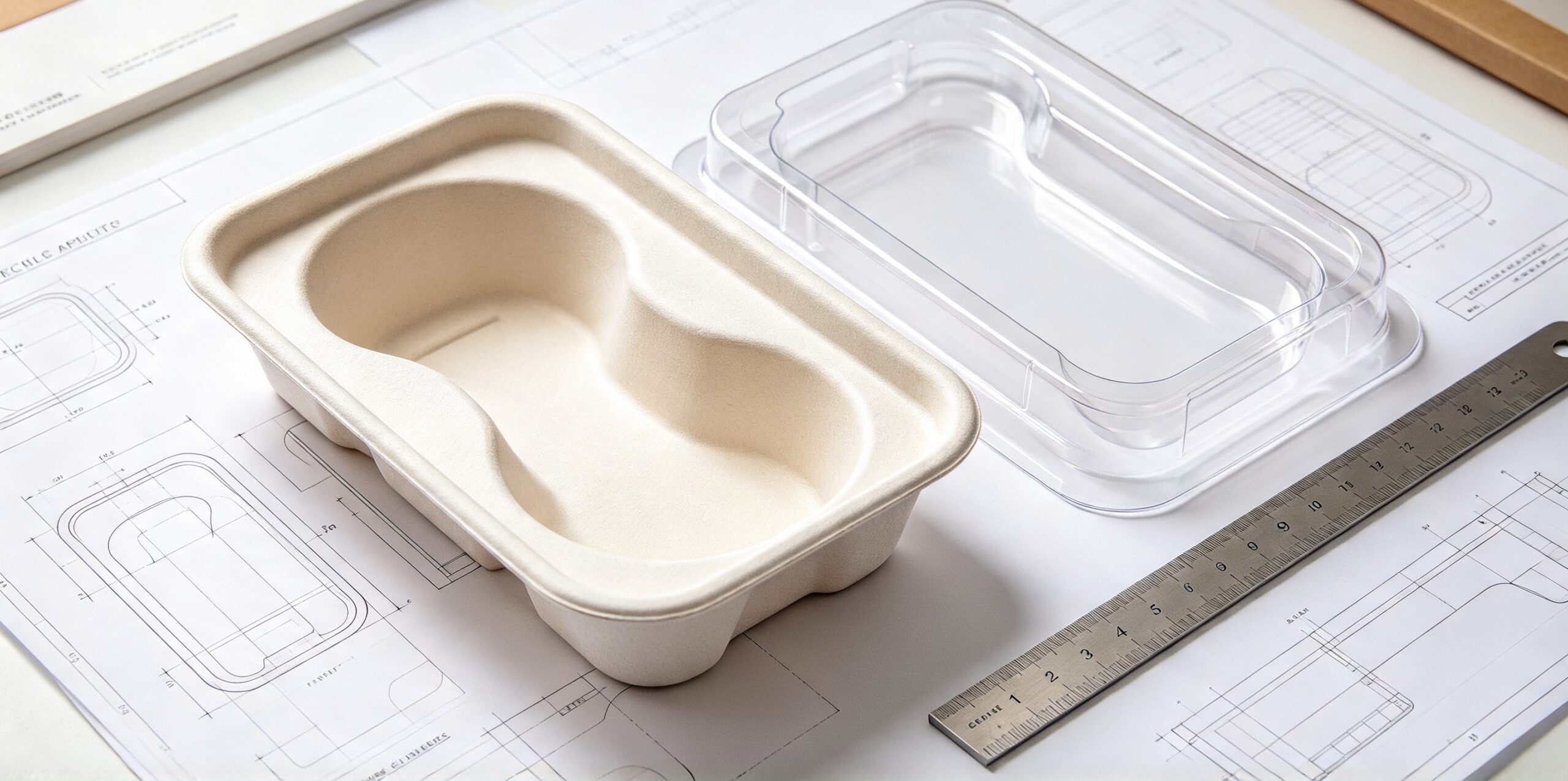
- Custom-Molded Paper Pulp (Zero-Plastic & Clean Luxury): An ideal fit for clean beauty brands. Precision-molded paper pulp provides a matte, stone-like texture that feels organic and contemporary. It completely eliminates plastic, leaving a clean, odorless impression upon unboxing.
- Recyclable APET Trays (Sleek, Precise & Budget-Friendly): For brands looking to balance cost efficiency with sustainability, recyclable APET offers a smart alternative. Unlike non-recyclable foam, APET is widely accepted in standard recycling streams. It delivers crisp, precision-molded contours to keep your device secure, offering a clean presentation while keeping tooling and production budgets flexible.
By offering both molded paper and recyclable APET options, brands can easily tailor their packaging structure to their exact commercial goals without compromising on modern market standards.
3. The Power of Compact: Ending the Era of Over-Packaging
In the past, many brands believed that a larger, heavier box signaled higher value on the shelf. Today, that mindset is obsolete. Over-packaging feels wasteful to modern consumers and adds unnecessary costs at every stage of shipping.
- Right-Sized Simplicity: The future of beauty tech packaging is compact. Designing a snug, sleek box tailored closely to the device’s actual dimensions creates a much cleaner presentation on a customer’s vanity.
- Practical Efficiency: By eliminating excess air and bloated dimensions, you keep international freight, local warehousing, and daily fulfillment costs lean. Keeping packaging neat and compact leaves more margin where it counts—in your growth budget.
4. A Practical Path to Implementation
Upgrading to eco-conscious packaging doesn’t have to be complicated. Working with the right manufacturing partner should make the process straightforward:
- Custom-Molded Eco Trays: Developing tailored paper-pulp or recyclable inner structures that securely hold your device, cords, and controller in an elegant layout.
- Material Clarity: Ensuring all paperboards, outer wraps, and interior trays use transparent, verifiable materials so your overseas retail partners and distributors have zero friction during import and store onboarding.
Looking Ahead
Packaging is often the very first tactile touchpoint a customer has with your brand. By eliminating over-packaging and choosing modern, compliant interior structures, you turn regulatory compliance into an unboxing ritual that builds lasting brand equity.