

Introduction
Infrared (IR) therapy is a proven game-changer in the beauty tech space. But for a brand founder, the choice between different wavelengths like 850nm and 1072nm isn’t just a technical decision—it’s a critical business strategy. It defines your target market, your product’s core claims, and your competitive positioning. This guide breaks down the strategic implications of each choice, helping you build a product that doesn’t just work, but wins.
The Science at a Glance: What Your Brand Needs to Know
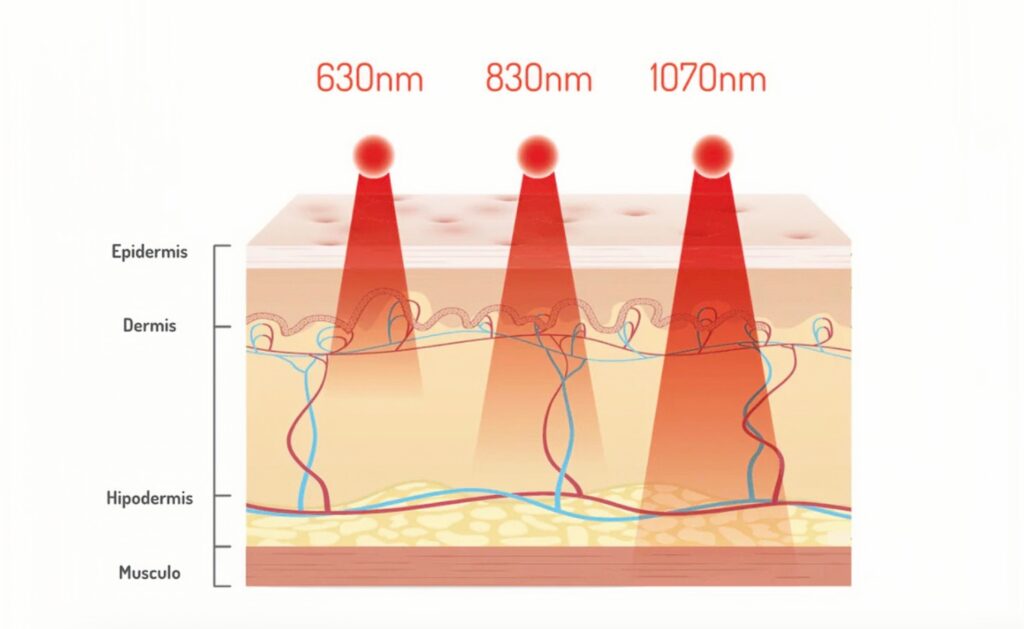
At its core, the difference lies in the depth of penetration.
- 850nm (The Dermis Dynamo): This wavelength is the industry’s gold standard for skin rejuvenation. It primarily targets the dermis (1.2-2.5mm), the layer responsible for collagen and elastin production.
- 1072nm (The Deep Tissue Specialist): This is a more specialized wavelength that penetrates much deeper (3-5mm), reaching beyond the skin into subcutaneous tissue, targeting muscles and even joints.
But what do these physical properties mean for your business? Let’s break it down.
Strategic Breakdown: 850nm vs. 1072nm as a Business Decision
Choosing a wavelength is choosing your battlefield. Here’s how the two options compare across key business domains:
Target Market & Core Claim
- 850nm: The mass-market champion. Your target audience is enormous: anyone interested in anti-aging, fine lines, and general skin radiance. Your core marketing claim is well-understood and highly sought after: “Stimulates collagen for younger-looking skin.”
- 1072nm: The niche specialist. Your target audience is more specific and educated: biohackers, athletes, and individuals seeking deep recovery, inflammation reduction, and pain management. Your claim is more “pro-level”: “Targets deep tissue for enhanced recovery and wellness.”
Product Positioning & Competitive Landscape
- 850nm: You are entering a proven, but crowded market (a “red ocean”). Your success depends on excellence in design, user experience, and branding to stand out. It’s often paired with 660nm red light to create the ultimate, universally appealing “gold standard” skin device.
- 1072nm: You are entering a less crowded, emerging market (a “blue ocean”). This allows you to position your brand as a pioneering innovator. However, it requires more consumer education to explain the benefits, representing both a challenge and an opportunity to become a category leader.
Manufacturing & Supply Chain Considerations
- 850nm: The supply chain is mature and robust. High-quality LEDs are widely available from multiple trusted suppliers, ensuring stable costs and production timelines. This is the lower-risk, more predictable option from a manufacturing standpoint.
- 1072nm: This is a more specialized component. The supply chain is less mature, meaning fewer suppliers and potentially higher costs or longer lead times. It requires a manufacturing partner with deep technical expertise and strong supplier relationships to ensure quality and consistency.
The “Gold Standard” vs. The “Innovator’s Choice
So, which path is right for your brand?
- If your goal is to capture the largest possible share of the proven anti-aging market with a beautifully designed, highly reliable product, the 850nm + 660nm combination is your undisputed gold standard. It’s a strategy built on excellence in execution.
- If your vision is to build a highly differentiated brand that targets a dedicated niche of wellness enthusiasts and early adopters, 1072nm offers a powerful way to innovate and lead a new category. It’s a strategy built on pioneering and education.
Ultimately, the right choice depends on your brand’s unique vision. The key is to partner with a manufacturer who understands not just the technical specifications, but the business strategy behind them.
Ready to discuss which strategy is right for your brand?