

Introduction
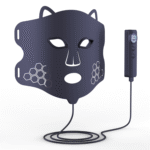
For any brand founder in the beauty space, launching an LED face mask is no longer a question of “if,” but “how.” The market is electric with opportunity, but it’s also flooded with noise. Specification sheets from potential ODM partners can look deceptively similar, all promising the same wavelengths and power levels.
But as a founder, your decision goes far beyond a spec sheet. You’re not just choosing a product; you’re choosing the partner who will guard your brand’s reputation. This guide is designed to help you ask the right questions—the ones that separate a mere order-taker from a true strategic partner who can help you build a brand, not just a device.
1. The Market is Booming: A Quick Look at the Numbers (Why Now?)
Before we dive into the “how,” let’s confirm the “why.” The demand for at-home beauty devices is not a fleeting trend; it’s a fundamental shift in consumer behavior.
Market research consistently points to explosive growth. For instance, a recent report from Maximize Market Research projects the global LED Mask Market to grow at an exceptional CAGR of 11.9%, reaching over USD 732.94 million by 2032. This isn’t just numbers; it’s a clear signal of massive, sustained consumer demand for effective, non-invasive skincare solutions they can use at home.
Here is the link to the report you found for reference: https://www.maximizemarketresearch.com/market-report/global-led-mask-market/82683/
The message is clear: the pie is getting bigger. The question is, how do you build a product that can claim a meaningful slice? It starts by looking beyond the obvious.
2. Beyond Wavelengths: The Three “Invisible” Metrics You Must Ask About
Every supplier will talk about wavelengths (like Red 630nm or NIR 850nm). A great partner will be ready to discuss the metrics that truly determine a product’s success.

- Metric #1: The “Goldilocks Zone” of Power Density
We’ve explored this before, but it’s the single most important technical question. It’s a common misconception that “more power is better.” The science of photobiomodulation works within an optimal “dose” window. Too little energy, and the light never reaches the fibroblasts in the dermis to stimulate collagen. Too much, and you can create a bio-inhibitory effect.
The question for your partner: “Don’t just tell me the power output. Show me how your engineering ensures the device delivers a consistent, optimal dose across the entire treatment area.” - Metric #2: The “Habit-Forming” Factor of Material & Design
Fancy tech doesn’t build a brand; customer habits do. An uncomfortable, heavy, or hard-to-clean mask will end up in a drawer after one week. The long-term success of your brand hinges on creating a device that is a pleasure to use.
The question for your partner: “Beyond the electronics, what is your philosophy on user ergonomics? What specific material choices (like medical-grade, flexible silicone vs. hard plastic) have you made to ensure comfort, fit, and ease of use?” - Metric #3: The “Peace of Mind” of Safety & Reliability
This is the boring stuff. The stuff that doesn’t go on the packaging but saves your brand from a recall crisis. It’s the hundreds of hours of aging tests, the component safety documentation, and the rigorous quality control on the production line.
The question for your partner: “Can you walk me through your QC process? How do you test for reliability and long-term safety, beyond just the initial performance?”
3. The Partnership Litmus Test: Three Questions to Ask Your Potential Supplier
Once you’re confident in their technical abilities, you need to assess their mindset. Are they a factory, or are they a partner?
- Question #1: “Do you obsess over my end-customer’s experience?”
A true partner understands that their job isn’t just to satisfy you, but to help you satisfy your customers. They think about the unboxing experience, the feel of the materials, the simplicity of the user manual. They care about the “first handshake” your brand makes with the customer. - Question #2: “How do you guarantee consistency at scale?”
A perfect prototype is easy. A perfect 10,000-unit production run is hard. Ask about their supply chain stability for critical components. Ask to see their production line. A confident and transparent partner will be proud to show you how they ensure the 10,000th device is identical to the first. - Question #3: “Are you a strategic partner, or just an order-taker?”
Will they challenge your ideas? Will they offer suggestions based on their manufacturing expertise? Do they understand your brand’s place in the market? The best partnerships are built on a foundation of mutual respect and collaborative innovation.
4. The Z Glow Beauty Philosophy: How We Answer These Questions
At Z Glow Beauty, we’ve built our entire philosophy around these questions.
Our obsession with user-centric design means we prioritize flexible, food-grade silicone for a universally comfortable fit. Our in-house performance testing ensures every device delivers an optimized, effective dose of light energy. Our transparent QC process, from component inspection to final assembly, is something we are proud to share with our partners.
We believe that our success is a direct reflection of our partners’ success. That’s why we don’t just build devices; we build brands.
5. Ready to Build a Brand, Not Just a Product?
Choosing a manufacturing partner is the single most important decision you will make. It’s a long-term relationship that will define your brand’s quality, reputation, and ultimate success. Choose the partner who obsesses over the same things you do: quality, user experience, and long-term value.